Polyamide
What is polyamide?
Polyamide is a synthetic polymer derived from petrochemicals, better known asNylon is the name given to it in textiles. It's a versatile plastic material, valued for its mechanical strength, durability, and elasticity. It can be found in many products, from sportswear and underwear to fishing nets and toothbrushes.Polyamide was discovered by Wallace Carothers, an American chemist working for the DuPont company, in 1935.
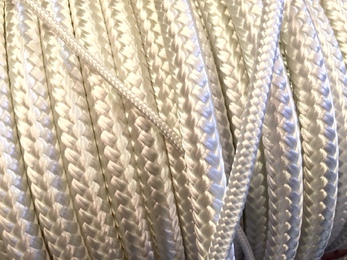
The fibers can be braided or twisted to create extremely strong ropes where durability and flexibility are also paramount. Polyamide ropes are highly valued for theirhigh elasticityand theirexcellent resistance to breakage and abrasionThese properties make them ideal for applications requiring shock absorption.
What are polyamide ropes used for?
Polyamide ropes are used in a variety of industrial and sporting applications, including climbing (dynamic ropes), boating (moorings and anchor lines), or for lifting loads.
What are the characteristics of polyamide ropes?
Shock absorption: The main characteristic of polyamide rope is its elasticity (high elongation), which allows it to absorb a large amount of energy. This is why it is the most commonly used material for dynamic climbing ropes.
High resistance: It has excellent resistance to breakage, abrasion and UV radiation.
Sustainability: Polyamide ropes are rot-proof and resistant to mold and fungi, which guarantees their longevity, even in aquatic environments.
Flexibility: It retains its flexibility even after prolonged use or exposure to extreme temperatures.
Chemical resistance: It is resistant to bases, but not resistant to acids.
Loss of wet strength: Polyamide absorbs water and can lose up to 35% of its breaking strength when wet.
Potential for irritation: Although more relevant to clothing, polyamide can retain heat and moisture.